By Dr. C. D. Dwivedi
BDS, MDS, FDS (KGMC LKO), MAOMSI, MIMA, MIDA
Oral & Maxillofacial Surgeon
Amrit Dental & Maxillofacial Clinic, Varanasi
Wisdom teeth, or third molars, are the last teeth to develop at the back of the mouth. Not every wisdom tooth needs to be removed. However, when a tooth is impacted, infected, painful, or unable to erupt properly, removal may be recommended.
What Is an Impacted Wisdom Tooth?
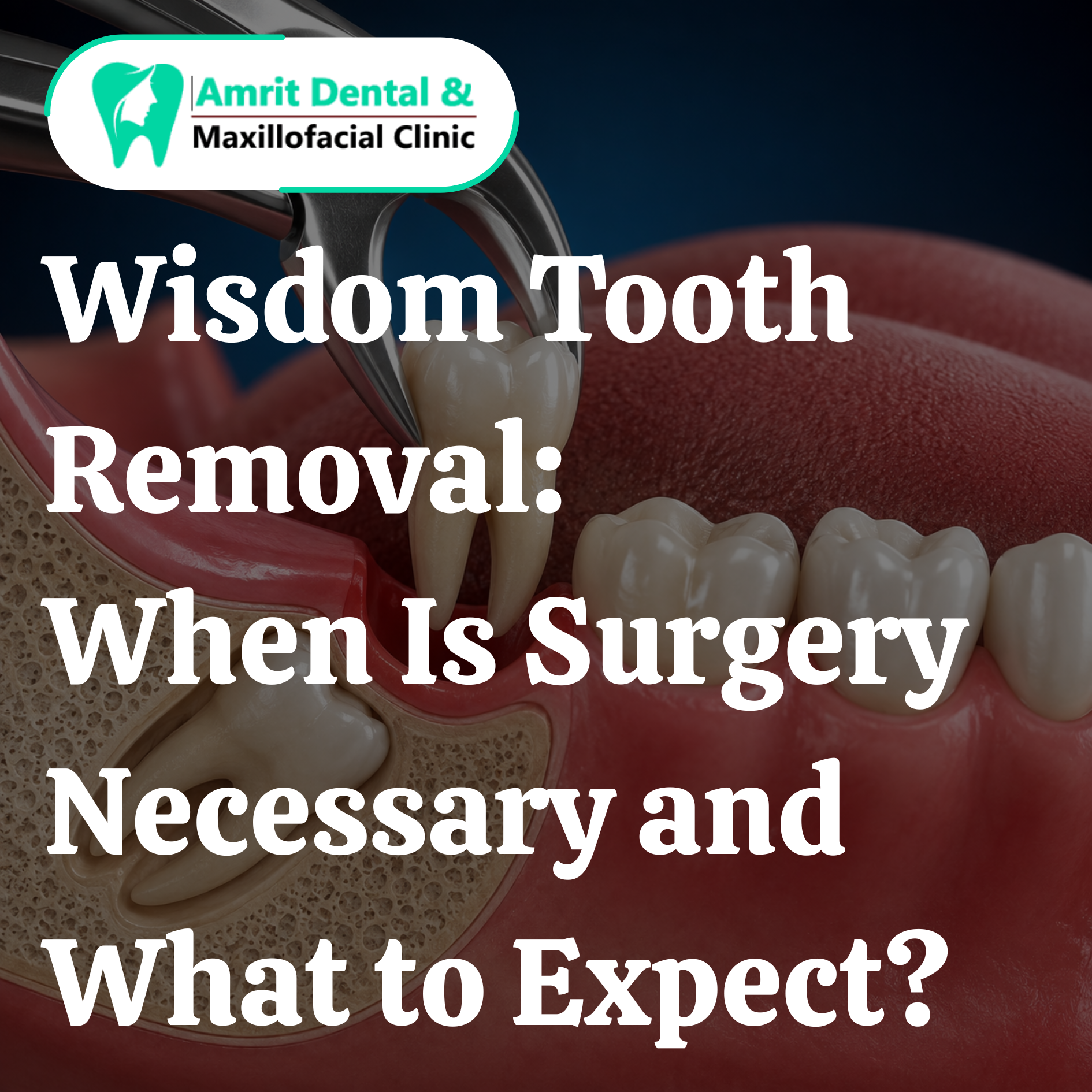
A wisdom tooth is called impacted when it cannot erupt normally because of limited space or an abnormal position. It may remain partly or completely covered by gum or bone, or grow at an angle toward the neighboring tooth.
Impacted teeth can be difficult to clean and may increase the risk of infection, decay and gum problems.
When Is Wisdom Tooth Removal Necessary?
Removal may be considered when there is:
Repeated pain or swelling
Infection around the tooth (pericoronitis)
Insufficient space for normal eruption
Damage or decay in the neighboring tooth
Difficulty maintaining oral hygiene
Cyst or other pathology around the tooth
Repeated food trapping or gum problems
Not every wisdom tooth requires surgery. The decision depends on the tooth’s position, symptoms, surrounding structures and overall oral health.
Does Wisdom Tooth Removal Always Require Surgery?
No. A fully erupted wisdom tooth may sometimes be removed through a straightforward extraction.
However, an impacted wisdom tooth may require surgical removal. Depending on its position, the surgeon may need to access the tooth through the gum, remove a small amount of surrounding bone, or divide the tooth into sections.
Dental imaging helps the surgeon understand the tooth’s position, roots and surrounding anatomy before treatment.
What Happens After Wisdom Tooth Removal?
Some swelling, tenderness or discomfort can occur after extraction. Recovery varies depending on the complexity of the procedure.
Your surgeon may recommend:
Taking prescribed medicines as directed
Maintaining proper oral hygiene
Eating suitable soft foods initially
Avoiding smoking
Following postoperative instructions and follow-up appointments
Common Wisdom Tooth Myths
Myth: Every wisdom tooth must be removed.
Fact: Removal is only recommended when the tooth is causing problems or has a significant risk of complications.
Myth: If the pain disappears, the tooth is fine.
Fact: Symptoms can come and go even when an underlying problem remains.
Myth: You should wait for severe pain before seeing a dentist.
Fact: Early evaluation can help identify problems before they become more complicated.
When Should You See an Oral & Maxillofacial Surgeon?
Consult a specialist if you experience:
Recurrent wisdom tooth pain
Swelling near the back of the jaw
Repeated gum infection
Difficulty opening your mouth
Difficulty chewing
Persistent bad taste or bad breath
Food frequently getting trapped around the tooth
A professional examination and appropriate imaging can determine whether the tooth should be monitored or removed.
Final Takeaway
A wisdom tooth does not automatically need to be removed. The decision depends on its position, symptoms, oral hygiene, surrounding structures and risk of future complications.
For impacted or complicated cases, consultation with an experienced Oral & Maxillofacial Surgeon can help determine the safest treatment option.
Consult Dr. C. D. Dwivedi at Amrit Dental & Maxillofacial Clinic for expert wisdom tooth evaluation and oral & maxillofacial care.
Amrit Dental & Maxillofacial Clinic
Sundarpur, Varanasi | Rajpura, Bhadohi
Call: +91 91700 03173 / +91 82990 43991