By Dr. Shweta Dwivedi
BDS, MDS, FDS (KGMC Lucknow)
Endodontist & Cosmetic Dentist
Amrit Maxillofacial and Dental Clinic
Introduction:
One of the most common misconceptions in dentistry is the belief that removing a painful tooth is easier and better than saving it. Many patients come to the clinic thinking extraction is the quickest solution to tooth pain. However, modern dentistry strongly emphasizes preserving natural teeth whenever possible.
Root canal treatment is one of the most reliable and scientifically proven procedures to save a severely damaged or infected tooth. When performed correctly, it restores function, relieves pain, and allows the tooth to remain healthy for many years.
As a dentist, my approach is always clear:
If a tooth can be saved, it should be saved.
What Is Root Canal Treatment?
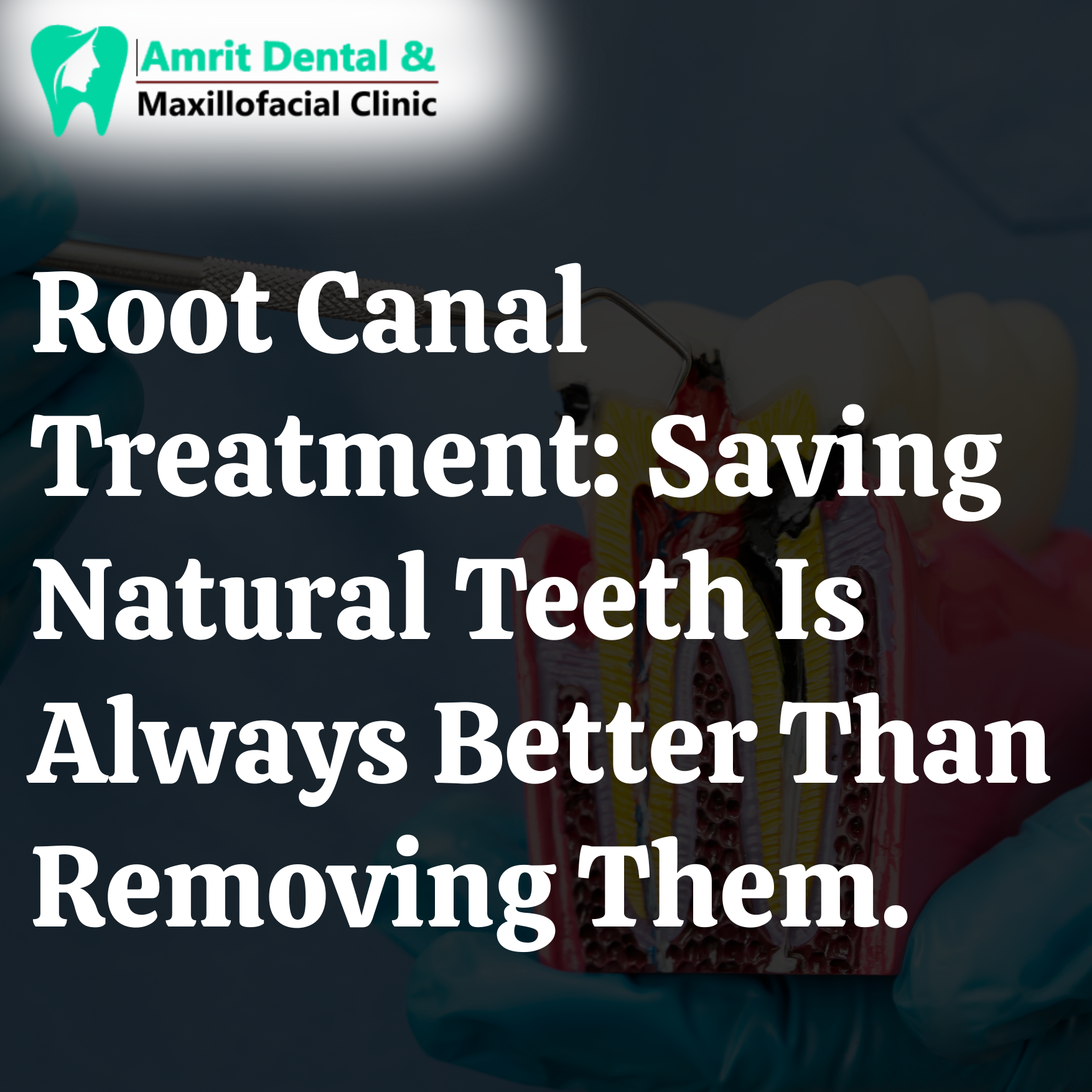
Root canal treatment is a specialized dental procedure used to treat infection or inflammation inside the tooth.
Inside every tooth is a soft tissue called the pulp, which contains nerves and blood vessels. When this pulp becomes infected due to deep decay, cracks, trauma, or repeated dental procedures, it causes severe pain and infection.
Root canal treatment involves:
Removing the infected pulp
Cleaning and disinfecting the root canals
Sealing the canals to prevent re-infection
Restoring the tooth with a crown for strength
The result is a pain-free, functional tooth that remains part of your natural smile.
Why Saving a Natural Tooth Is Always Better
A natural tooth is biologically designed to:
Absorb chewing forces
Maintain jawbone health
Preserve natural bite alignment
Support facial structure
No artificial replacement—whether a bridge, denture, or implant—can fully replicate the natural function of a healthy tooth.
Root canal treatment allows you to keep your original tooth, which is always the most conservative and beneficial option.
Common Reasons Patients Need Root Canal Treatment
Root canal treatment becomes necessary when the inner pulp is damaged due to:
Deep dental cavities
Long-standing tooth decay
Cracked or fractured teeth
Dental trauma or injury
Repeated fillings on the same tooth
Untreated gum infections reaching the root
Ignoring these problems can lead to abscess formation, swelling, bone loss, and systemic infection.
Symptoms That Indicate You May Need a Root Canal
You should consult a dentist immediately if you experience:
Persistent tooth pain
Pain while chewing or biting
Sensitivity to hot or cold that lasts long
Swelling near the affected tooth
Gum boils or pus discharge
Tooth discoloration
Pain that worsens at night
Early diagnosis significantly improves treatment success.
Root Canal Treatment vs Tooth Extraction
Many patients ask:
“Why not just remove the tooth and finish the problem?”
The answer is simple: tooth loss creates bigger problems.
Problems Caused by Tooth Extraction
Shifting of adjacent teeth
Bite imbalance
Difficulty chewing
Bone loss in the jaw
Facial collapse over time
Need for replacement (implant or bridge)
Advantages of Root Canal Treatment
Preserves natural tooth
Maintains chewing efficiency
Prevents bone loss
Avoids additional procedures
Cost-effective long term
Maintains natural smile aesthetics
Extraction should always be the last option, not the first.
Is Root Canal Treatment Painful?
This is the biggest myth.
With modern anesthesia, advanced instruments, and refined techniques, root canal treatment is virtually painless. In fact, the procedure relieves pain, not causes it.
Most patients report that root canal treatment feels similar to getting a regular filling.
Pain after treatment is usually mild and temporary and resolves within a few days.
How Safe Is Root Canal Treatment?
Root canal treatment is a highly safe and predictable procedure when performed by an experienced dentist.
At our clinic, we follow:
Strict sterilization protocols
Advanced diagnostic imaging
Precision instrumentation
Evidence-based treatment planning
With proper care, a root canal-treated tooth can last a lifetime.
Why a Crown Is Important After Root Canal
After root canal treatment, the tooth becomes more brittle because the nerve supply is removed. To protect it from fracture, a dental crown is strongly recommended.
A crown:
Restores strength
Protects from breakage
Restores normal chewing function
Improves appearance
Skipping the crown increases the risk of tooth fracture.
Long-Term Success of Root Canal Treatment
Success rates of root canal treatment are very high when:
Diagnosis is timely
Proper cleaning and sealing are done
A crown is placed
Oral hygiene is maintained
Regular dental checkups further ensure long-term success.
Who Is an Ideal Candidate for Root Canal Treatment?
Root canal treatment is suitable for patients who:
Have infected or inflamed pulp
Want to save their natural tooth
Have sufficient remaining tooth structure
Are medically fit for routine dental procedures
Age is not a limiting factor. The condition of the tooth matters more than the patient’s age.
Message from Dr. Shweta Dwivedi
“Removing a natural tooth should never be the first choice. Root canal treatment allows us to preserve what nature has given us. With modern dentistry, saving a tooth is safe, comfortable, and always better than extraction.”
Book Your Root Canal Consultation
Amrit Maxillofacial and Dental Clinic
📍 Kailash Puri, Newada, Sunderpur, Varanasi
📞 +91 91700 03173
🌐 www.amritdentalclinic.in
Services Available:
Root Canal Treatment • Single & Multiple Tooth Restoration • Dental Crowns • Cosmetic Dentistry • Oral Rehabilitation
Final Thoughts:
Root canal treatment is not something to fear—it is a solution designed to relieve pain, stop infection, and preserve your natural teeth.
If you are experiencing tooth pain or have been advised extraction without a second opinion, consult a qualified dentist. Saving your natural tooth today can prevent complex dental problems tomorrow.
“Because in dentistry, preservation is always better than replacement.“