Why Saving Your Natural Tooth Is Often Better
By Dr. Shweta Dwivedi
BDS, MDS, FDS (KGMC LKO)
Endodontist & Cosmetic Dentist
Amrit Dental & Maxillofacial Clinic, Varanasi
When a tooth is badly damaged, infected, or causing persistent pain, many people assume that extraction is the only solution. However, if the tooth can be successfully treated and restored, Root Canal Treatment (RCT) may help eliminate infection while preserving the natural tooth.
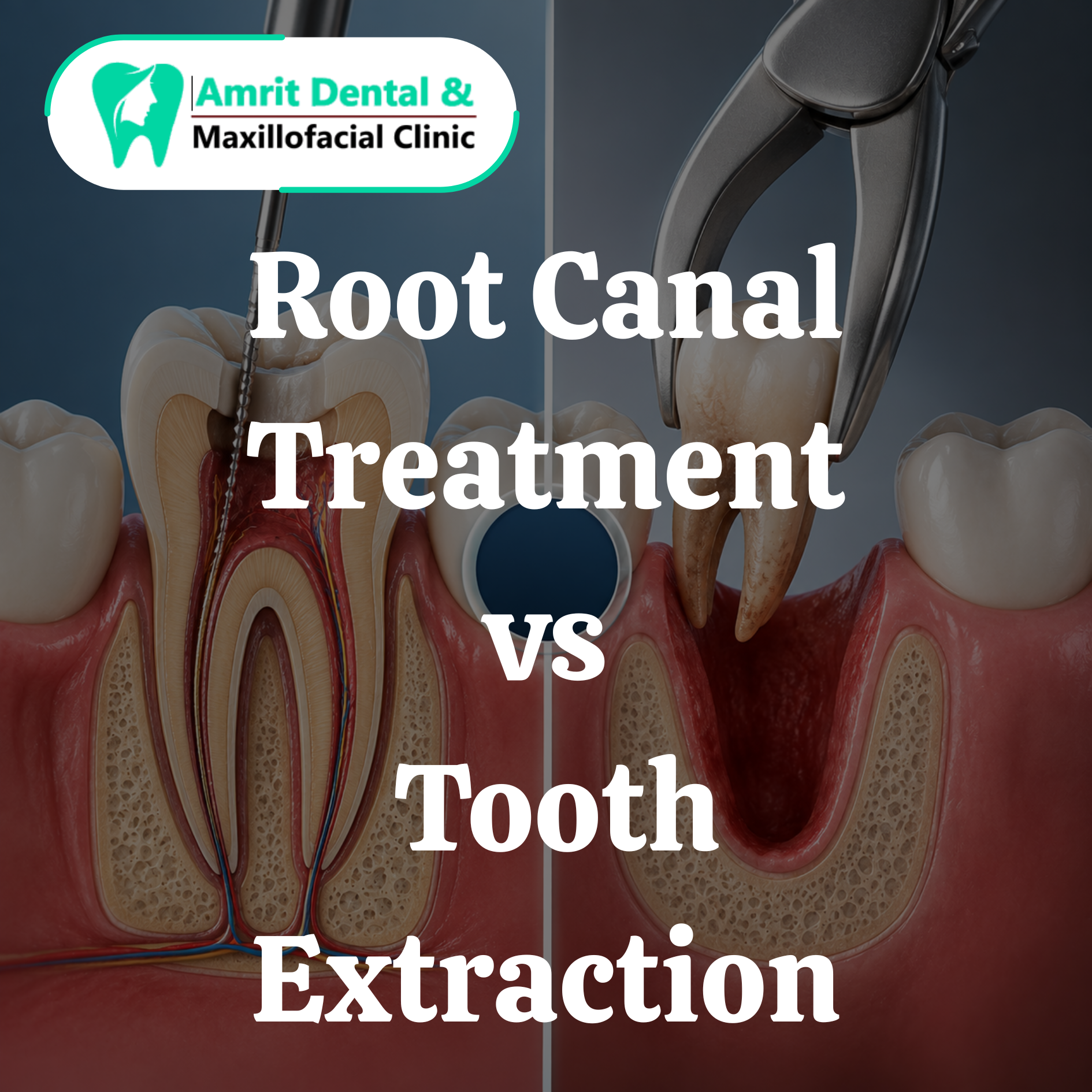
Root Canal vs Tooth Extraction
Root Canal Treatment removes infected or inflamed pulp from inside the tooth. The canals are cleaned, disinfected, and sealed to prevent reinfection.
Tooth extraction completely removes the affected tooth.
The right treatment depends on the tooth’s condition, extent of infection, cracks or fractures, gum health, and whether the tooth can be restored.
Benefits of Saving Your Natural Tooth
Whenever possible, preserving a natural tooth can help:
Maintain normal chewing and biting function
Preserve the natural appearance of your smile
Avoid immediate tooth replacement
Maintain the balance of surrounding teeth
After extraction, replacement may require an implant, bridge, or another restorative treatment.
When Is Root Canal Treatment Needed?
RCT may be recommended for:
Deep dental decay
Cracked or damaged teeth
Dental trauma
Repeated dental procedures
Infection beneath an existing filling or crown
Warning signs may include persistent tooth pain, sensitivity to hot or cold, pain while biting, swelling, tenderness, or a recurring gum pimple. Some infections, however, may cause little or no pain.
Does Root Canal Treatment Hurt?
Modern RCT is performed under local anesthesia and is designed to remove the source of infection and relieve pain. Some temporary soreness may occur after treatment, but the procedure is generally well tolerated.
When Is Extraction Necessary?
Extraction may be required when a tooth is too severely damaged or cannot be predictably restored.
Therefore, tooth pain does not automatically mean that extraction is necessary. A detailed dental examination and appropriate imaging can help determine whether the tooth can be saved.
What Happens After a Root Canal?
After RCT, the tooth may require a filling, crown, or other restoration depending on its condition. Proper restoration helps protect the treated tooth and restore its function and appearance.
Why Consult an Endodontist?
An endodontist specializes in diagnosing and treating problems involving the dental pulp and tissues around tooth roots. Specialist evaluation can be especially helpful for complicated infections, persistent symptoms, previously treated teeth, or difficult root canal anatomy.
Dr. Shweta Dwivedi, BDS, MDS, FDS (KGMC LKO), Endodontist & Cosmetic Dentist, provides specialized endodontic and cosmetic dental care at Amrit Dental & Maxillofacial Clinic, Varanasi.
Root Canal or Extraction: Which Is Right for You?
There is no one-size-fits-all answer. If a tooth can be successfully treated and restored, saving the natural tooth is often a preferred option. If it cannot be predictably saved, extraction followed by suitable tooth replacement may be recommended.
Don’t let fear decide the fate of your tooth. Persistent pain, swelling, sensitivity, or discomfort while chewing should be professionally evaluated.
For expert endodontic and cosmetic dental care, consult Dr. Shweta Dwivedi at Amrit Dental & Maxillofacial Clinic, Varanasi.
Book Your Dental Consultation Today
Amrit Dental & Maxillofacial Clinic
Sundarpur, Newada, Varanasi, Uttar Pradesh
Phone: +91 91700 03173 | +91 8299043991
Website: amritdentalclinic.in