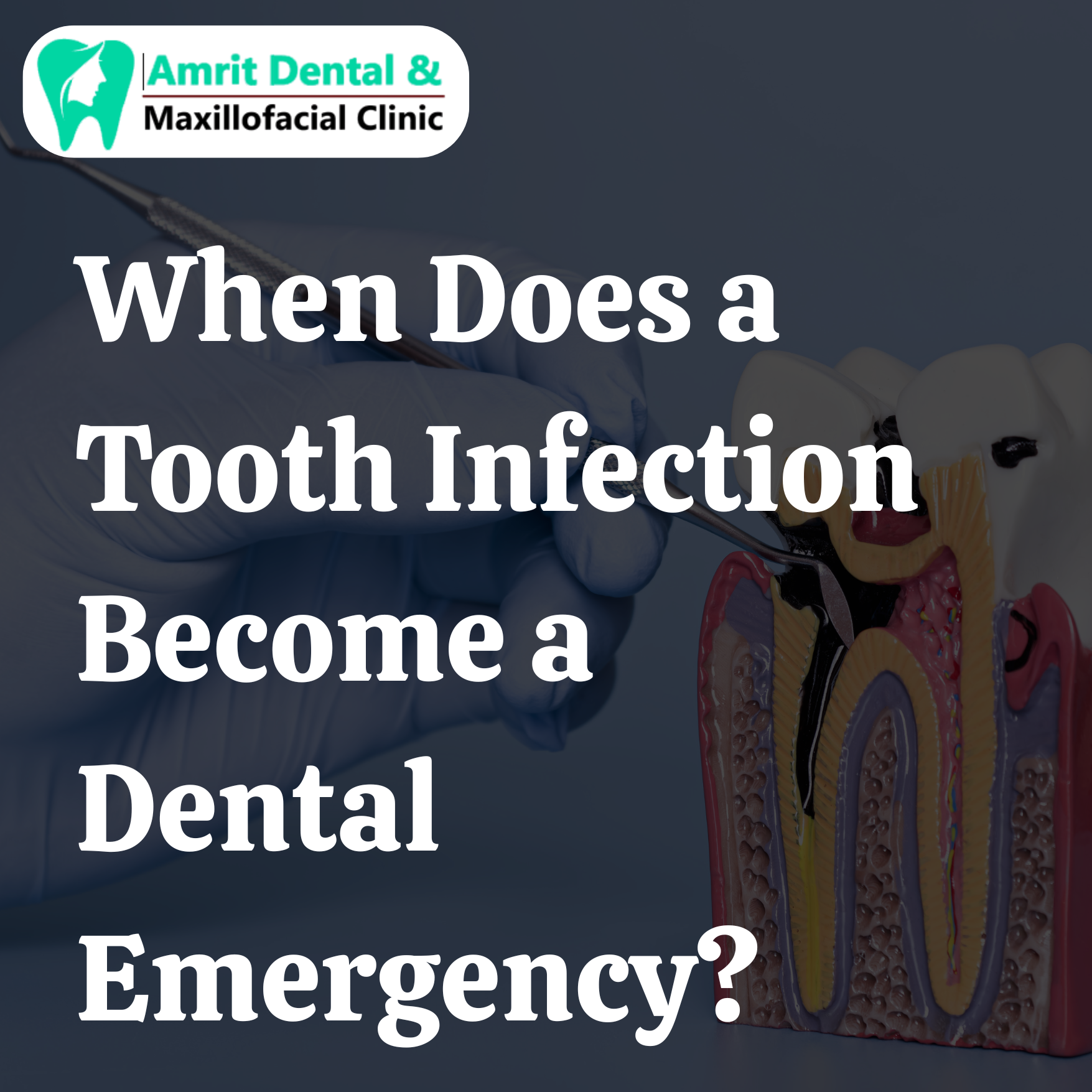
Warning Signs You Should Never Ignore
How Delaying Treatment Can Lead to Facial Swelling and Serious Complications
By Dr. C. D. Dwivedi
BDS, MDS, FDS (KGMC LKO)
MAOMSI, MIMA, MIDA
Oral & Maxillofacial Surgeon
Amrit Dental & Maxillofacial Clinic, Varanasi
Introduction
A tooth infection often begins with mild pain or sensitivity, making it easy to ignore.
However, not every tooth infection remains a minor problem.
If left untreated, the infection can spread to the surrounding gums, jawbone, facial tissues, and in rare cases, even other parts of the body. What starts as a simple toothache may eventually require emergency dental or surgical treatment.
Recognizing the warning signs early can help prevent serious complications.
What Causes a Tooth Infection?
A tooth infection usually develops when bacteria enter the inner part of the tooth through:
- Deep tooth decay (cavities)
- Untreated cracked or broken teeth
- Severe gum disease
- Failed or untreated root canal treatment
- Dental trauma
Once bacteria reach the tooth pulp, the infection can spread beyond the root if treatment is delayed.
Warning Signs That Need Immediate Attention
Severe, Persistent Toothache
Pain that doesn’t improve with painkillers or becomes worse over time should never be ignored.
Facial Swelling
Swelling of the cheek, jaw, or face often indicates that the infection has spread beyond the affected tooth.
Difficulty Opening the Mouth
Pain or stiffness while opening the mouth may suggest that the infection has involved deeper tissues.
Fever Along with Tooth Pain
Fever accompanied by dental pain may indicate that your body is fighting a significant infection.
Pus or Bad Taste in the Mouth
Drainage of pus or a persistent foul taste can be a sign of a dental abscess.
Difficulty Swallowing or Breathing
Although uncommon, these symptoms require immediate emergency medical attention, as they may indicate a rapidly spreading infection.
What Happens If a Tooth Infection Is Ignored?
Delaying treatment may lead to:
- Dental abscess
- Facial swelling
- Jawbone infection
- Difficulty eating or speaking
- Tooth loss
- More complex surgical treatment
Early treatment is usually simpler, less painful, and more effective.
How Is a Tooth Infection Treated?
Treatment depends on the severity of the infection and may include:
- Drainage of the infection
- Root Canal Treatment (if the tooth can be saved)
- Tooth extraction when necessary
- Antibiotic therapy (only when clinically indicated)
- Minor oral surgical procedures in advanced cases
Your Oral & Maxillofacial Surgeon will recommend the most appropriate treatment after a thorough evaluation.
How Can You Prevent Serious Tooth Infections?
Simple habits can greatly reduce the risk:
✔ Brush twice daily with fluoride toothpaste
✔ Floss regularly
✔ Don’t ignore cavities or persistent tooth pain
✔ Visit your dentist for regular dental check-ups
✔ Seek treatment early if swelling or severe pain develops
Expert Insight – Dr. C. D. Dwivedi
“Many patients wait until facial swelling develops before seeking treatment. A tooth infection is much easier to manage in its early stages. Timely dental care not only relieves pain but also prevents serious complications while helping preserve your natural teeth and oral health.”
Book a Consultation
Dr. C. D. Dwivedi
BDS, MDS, FDS (KGMC LKO)
MAOMSI, MIMA, MIDA
Oral & Maxillofacial Surgeon
🏥 Amrit Dental & Maxillofacial Clinic
📍 Address:
Kailashpuri, Newada, Sunderpur, Varanasi
📞 Appointments:
+91 91700 03173
🌐 Website:
www.amritdentalclinic.in
Final Thoughts
A tooth infection rarely gets better on its own.
Ignoring persistent pain, swelling, or other signs of infection allows the problem to spread and may lead to more complicated treatment.
The sooner a tooth infection is diagnosed, the easier it is to treat. If you notice persistent tooth pain, facial swelling, or fever, don’t wait—seek professional dental care promptly to protect your oral health and prevent serious complications.