It Could Be a TMJ Disorder
When Jaw Problems Need an Oral & Maxillofacial Surgeon.
By Dr. C. D. Dwivedi
Oral & Maxillofacial Surgeon
Amrit Maxillofacial and Dental Clinic
Introduction:
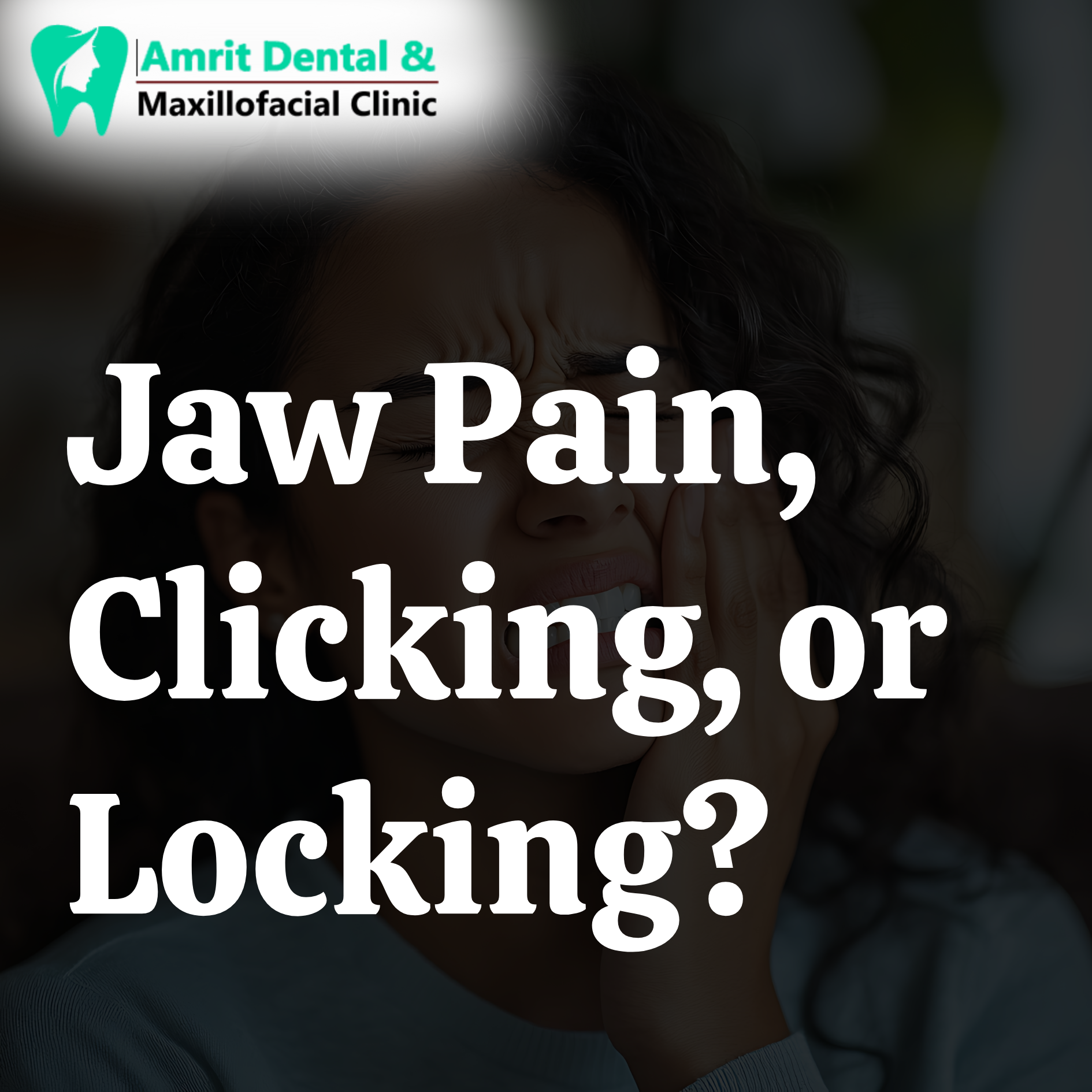
Jaw pain is often ignored or mistaken for a temporary muscle strain, dental pain, or stress-related discomfort. Many patients live for months—or even years—with jaw clicking, difficulty opening the mouth, or pain while chewing, assuming it will resolve on its own.
This is a serious misconception.
Jaw pain, clicking, or locking may indicate a Temporomandibular Joint (TMJ) disorder, a condition that affects the jaw joint and surrounding muscles. If left untreated, TMJ disorders can worsen over time, leading to chronic pain, restricted jaw movement, and significant impact on daily life.
As an Oral & Maxillofacial Surgeon, I frequently see patients who delayed treatment and later required more complex management that could have been avoided with early care.
What Is the TMJ (Temporomandibular Joint)?
The temporomandibular joint (TMJ) is the joint that connects the lower jaw (mandible) to the skull. It is one of the most complex joints in the body, responsible for:
Opening and closing the mouth
Chewing and biting
Speaking and yawning
Because the TMJ is constantly in use, even minor problems can significantly affect comfort and function.
What Is a TMJ Disorder?
A TMJ disorder (TMD) refers to problems affecting the jaw joint, jaw muscles, or surrounding structures. These disorders can be muscular, joint-related, or a combination of both.
TMJ disorders may develop gradually or suddenly and often worsen without proper treatment.
Common Symptoms of TMJ Disorders
You may have a TMJ disorder if you experience:
Jaw pain or tenderness
Clicking, popping, or grinding sounds while opening or closing the mouth
Difficulty opening the mouth fully
Jaw locking (open or closed position)
Pain while chewing
Facial pain or headache
Ear pain or a feeling of ear fullness without infection
These symptoms should never be ignored, especially if they persist or worsen.
Why Jaw Clicking or Locking Is a Warning Sign
Occasional jaw sounds without pain may not be serious. However, persistent clicking, pain, or locking indicates joint dysfunction, such as:
Displacement of the joint disc
Joint inflammation
Degenerative changes
Muscle imbalance
If untreated, these problems can progress to chronic joint damage and restricted jaw movement.
Common Causes of TMJ Disorders
- Teeth Grinding or Clenching (Bruxism)
Chronic grinding or clenching places excessive pressure on the TMJ, leading to:
Joint strain
Muscle fatigue
Disc displacement
Stress often worsens this condition.
- Missing Teeth or Bite Imbalance
Loss of teeth or improper bite alignment can:
Alter jaw position
Increase stress on the TMJ
Cause progressive joint damage
Dental imbalance is a major but often overlooked cause.
- Jaw Injury or Trauma
Accidents, falls, or sports injuries may damage:
The jaw joint
Surrounding muscles and ligaments
Symptoms may appear immediately or develop later.
- Arthritis or Degenerative Joint Changes
Inflammatory or degenerative conditions can affect the TMJ, causing:
Pain
Stiffness
Reduced jaw movement
Early diagnosis helps slow progression.
- Poor Posture and Chronic Muscle Strain
Neck and shoulder posture affects jaw mechanics. Long-term strain may contribute to TMJ dysfunction.
Why TMJ Disorders Should Not Be Ignored
Untreated TMJ problems can lead to:
Chronic facial pain
Severe jaw restriction
Difficulty eating and speaking
Persistent headaches
Reduced quality of life
Early intervention prevents long-term complications.
When to Consult an Oral & Maxillofacial Surgeon
You should seek specialist care if you experience:
Jaw pain lasting more than a few days
Recurrent jaw clicking with pain
Jaw locking episodes
Difficulty opening the mouth
Pain spreading to face, ear, or head
An Oral & Maxillofacial Surgeon is specially trained to diagnose and manage complex jaw joint conditions.
How TMJ Disorders Are Evaluated
At a specialized maxillofacial clinic, evaluation includes:
Detailed jaw and bite examination
Assessment of joint movement and sounds
Evaluation of dental and facial structure
Identification of muscular or joint causes
Accurate diagnosis is essential for effective treatment.
Treatment Options for TMJ Disorders
Treatment depends on the cause and severity and may include:
Bite correction or splints
Management of grinding or clenching
Jaw muscle and joint therapy
Addressing missing teeth or bite imbalance
Advanced surgical care in selected cases
Early treatment is usually conservative and highly effective.
Expert Insight – Dr. C. D. Dwivedi
“Jaw pain and clicking are not normal findings.
TMJ disorders worsen silently if ignored.
Early evaluation allows simple treatment and prevents long-term joint damage.”
Why Choose Amrit Maxillofacial and Dental Clinic, Varanasi?
Specialized expertise in jaw joint disorders
Comprehensive diagnosis and treatment planning
Advanced maxillofacial care
Patient-focused, ethical approach
Emphasis on long-term function and comfort
Book a Consultation
Amrit Maxillofacial and Dental Clinic
👨⚕️ Dr. C. D. Dwivedi
Oral & Maxillofacial Surgeon
📍 Kailash Puri, Newada, Sunderpur, Varanasi
📞 +91 91700 03173
🌐 www.amritdentalclinic.in
Final Message:
Jaw pain, clicking, or locking is not something to live with or ignore.
It is a warning sign of TMJ dysfunction.
Early diagnosis and proper treatment by an Oral & Maxillofacial Surgeon can restore comfort, function, and quality of life.
“Because healthy jaws are essential for eating, speaking, and living comfortably.”