By Dr. C. D. Dwivedi
Oral & Maxillofacial Surgeon
Amrit Maxillofacial and Dental Clinic
Introduction:
One of the most common concerns patients express when considering dental implants is:
“Doctor, I have very little bone. Can implants still be done?”
For many years, low jawbone volume was considered a major limitation for implant treatment. Patients were often advised complex bone grafting or sinus lift surgeries, followed by long healing periods lasting several months.
However, modern implantology has evolved significantly.
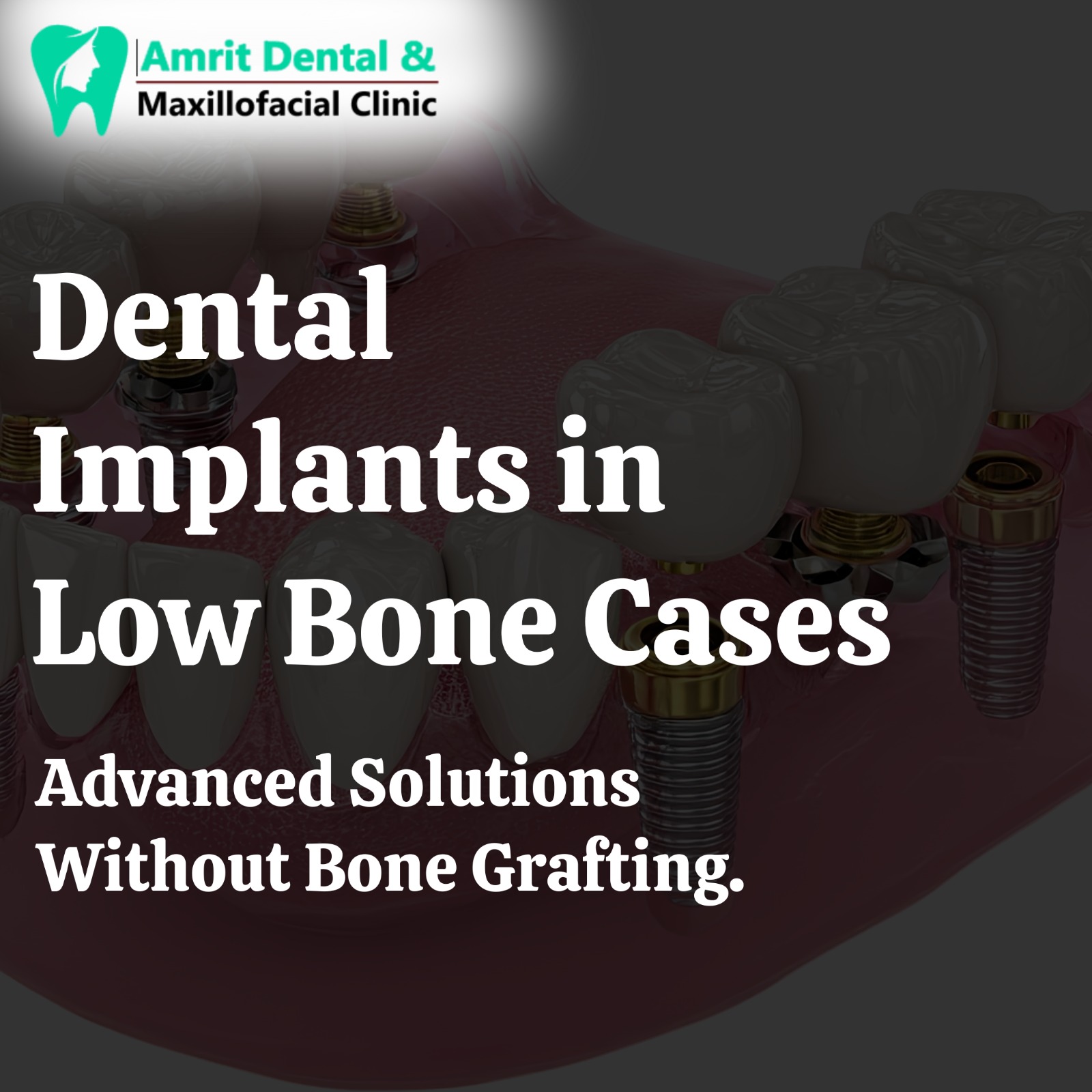
Today, advanced implant techniques allow successful dental implant placement even in low bone cases — without bone grafting. This has transformed treatment possibilities for patients who were previously told that implants were not an option.
Understanding Bone Loss in the Jaw
Jawbone loss commonly occurs due to:
Long-term missing teeth
Use of removable dentures
Advanced gum disease (periodontitis)
Trauma or infections
Natural aging process
When teeth are lost, the jawbone no longer receives chewing stimulation, leading to progressive bone resorption. Over time, this reduces bone height and width, making conventional implants difficult.
Why Bone Grafting Was Traditionally Recommended
Conventional dental implants rely mainly on spongy (cancellous) bone for stability.
In low bone situations, this softer bone may not provide sufficient anchorage.
Bone grafting was introduced to:
Increase bone volume
Create support for implants
Improve long-term success
However, bone grafting involves:
Additional surgical procedures
Increased cost
Longer healing time (4–9 months)
Higher patient discomfort
This led to the need for more predictable, less invasive alternatives.
Advanced Implant Solutions Without Bone Grafting
Modern implant dentistry now focuses on utilizing the stronger basal (cortical) bone of the jaw.
This dense bone layer:
Does not resorb easily
Provides excellent primary stability
Can bear immediate chewing forces
Using advanced implant designs and surgical protocols, implants can be placed securely without adding artificial bone.
Role of Basal and Cortical Implant Techniques
Basal or cortical implantology uses specialized implant designs that anchor into deep, stable bone areas of the jaw.
Key advantages include:
No need for bone grafting
Immediate stability
Reduced surgical trauma
Faster rehabilitation
This approach is especially beneficial in:
Severe bone loss cases
Elderly patients
Medically compromised individuals
How Implant Placement Works in Low Bone Cases
The process typically involves:
Detailed Clinical & Radiographic Evaluation
Advanced imaging helps assess bone quality and identify strong cortical areas.
Strategic Implant Placement
Implants are anchored into dense bone zones that provide long-term stability.
Immediate or Early Loading
Fixed teeth can often be placed within a few days.
Final Prosthetic Rehabilitation
A permanent fixed bridge restores function and aesthetics.
This method avoids unnecessary augmentation surgeries while maintaining excellent outcomes.
Who Is an Ideal Candidate for Implants Without Bone Grafting?
Patients who may benefit include those who:
Have long-standing missing teeth
Were previously told implants are not possible
Have significant jawbone loss
Wear loose or uncomfortable dentures
Want faster treatment without multiple surgeries
Even patients with controlled diabetes or age-related bone loss can often be treated successfully with proper planning.
Safety and Long-Term Success
When performed by an experienced Oral & Maxillofacial Surgeon, implant placement in low bone cases is:
Scientifically sound
Clinically safe
Highly predictable
Success depends on:
Proper case selection
Correct implant design
Precise surgical execution
Post-treatment oral hygiene
With these factors in place, implants can function reliably for many years.
Why Specialist Expertise Matters
Low bone implant cases require advanced anatomical knowledge and surgical skill.
An Oral & Maxillofacial Surgeon is trained to:
Handle complex bone conditions
Plan implant placement biomechanically
Manage medical risk factors
Ensure long-term implant success
Choosing the right specialist significantly improves outcomes and patient confidence.
Expert Insight from Dr. C. D. Dwivedi
“Low bone should never be the reason to compromise a patient’s quality of life. With modern implant techniques, we can restore fixed teeth safely and effectively without bone grafting. The focus is on stability, function, and long-term comfort.”
Why Choose Amrit Maxillofacial and Dental Clinic, Varanasi
Advanced implantology protocols
Digital treatment planning
Modern sterilization standards
Experience in complex implant cases
Patient-centric, transparent care
Book Your Implant Consultation
Amrit Maxillofacial and Dental Clinic
👨⚕️ Dr. C. D. Dwivedi – Oral & Maxillofacial Surgeon
📍 Kailash Puri, Newada, Sunderpur, Varanasi
📞 +91 91700 03173
🌐 www.amritdentalclinic.in
Final Thoughts:
Jawbone loss no longer means you must live with dentures or missing teeth.
Thanks to advanced implant techniques without bone grafting, patients with low bone can now receive strong, fixed, and long-lasting teeth—often in a much shorter time frame.
If you have been told that implants are not possible due to bone loss, a second professional opinion may open new possibilities.
“Because modern dentistry is not about limitations, it is about solutions.”